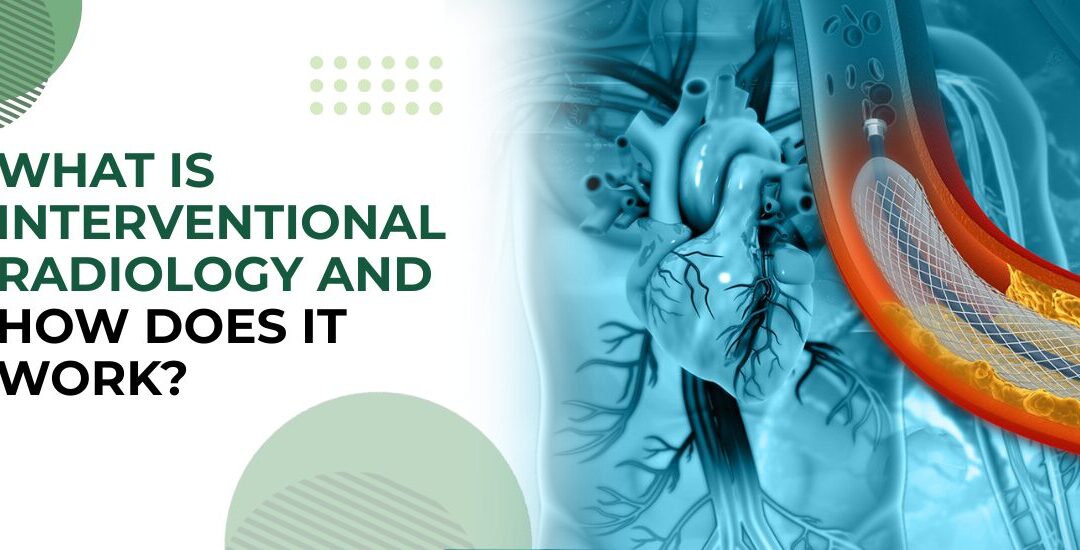
Interventional radiology uses imaging like X-rays, CT scans and ultrasound to guide procedures inside your body through tiny punctures instead of big cuts, so doctors navigate through natural openings or pencil-tip holes while real-time images show exactly where tools go and there’s basically no guessing involved at all.
According to Dr. Aniruddha Kulkarni, Interventional Radiologist in Mumbai,
“We’re treating serious problems with imaging precision here, which means way less trauma to healthy tissue and genuinely better outcomes for patients overall.”
Worried about surgery risks or spending weeks recovering?
How Does Interventional Radiology Actually Work?
Imaging comes first to locate the problem area, then the doctor inserts a thin catheter or needle through the skin which is considerably smaller than most patients anticipate, while live imaging maintains continuous visualization of the instrument throughout its path to the target site ensuring precise positioning.
- Advanced imaging gives you real-time views using CT or ultrasound or fluoroscopy or MRI depending on what shows things clearest during that specific procedure, having constant visual feedback the whole way through means you’re never working blind which matters a ton for getting precision right
- Catheter-based tools come in a bunch of different types for different jobs and some of them deliver medications while others place stents or yank out clots, each one’s designed specifically for doing precision work in really tight spaces where regular instruments just won’t fit
- Minimal access happens because local anesthesia combined with mild sedation covers the vast majority of cases pretty easily, you rarely need general anesthesia at all which honestly drops your overall risk quite a bit when you compare it to traditional open surgery
- Precision targeting works because imaging’s showing catheter position in actual real time so the treatment hits exactly what needs hitting and leaves all the healthy tissue completely alone, recovery ends up being way faster than open surgery and sometimes it’s dramatically faster
Plenty of patients are skipping traditional surgery completely these days with varicose veins treatment in Chembur or other similar IR procedures that genuinely work just as well.
What Conditions Can Interventional Radiology Treat?
IR handles all sorts of conditions across multiple body systems and image-guided techniques are working as first-line treatment now for patients who’d honestly rather avoid invasive surgery, which let’s be real is pretty much everyone when you actually give them the choice.
- Vascular conditions like blocked arteries or deep vein clots or aneurysms or peripheral artery disease respond really well to IR techniques these days, angioplasty treatment in Chembur opens up those vessels using balloons and stents without doing any cutting at all which obviously speeds up recovery a lot
- Cancer management covers things like liver tumors and kidney masses and lung nodules and bone lesions where ablation just burns them out completely, embolization starves them of their blood supply, targeted chemo hits them super directly, liver cancer management uses radioembolization for destroying cancer cells while it’s sparing all that healthy liver tissue sitting right around them
- Chronic pain relief comes through nerve blocks and joint shots and vertebroplasty procedures, some patients with spinal fractures are feeling relief literally immediately on the same day they get treated which can genuinely be completely life-changing for them
- Uterine fibroids and bleeding get handled through embolization that cuts off blood supply so those fibroids naturally shrink down on their own, the uterus stays completely intact and fertility gets preserved while you’re avoiding hysterectomy altogether
IR just keeps expanding every year as imaging technology and catheter tools keep getting better and better, new applications are showing up regularly in actual clinical practice now.
Why Choose Dr. Aniruddha Kulkarni for Interventional Radiology?
Dr. Aniruddha Kulkarni has been doing interventional radiology for over 20 years now after he trained at Tata Memorial and worked at both Hinduja and KEM hospitals, these days he’s Director of Vascular and Interventional Radiology over at Nanavati Max where he handles vascular work and oncologic procedures and hepatobiliary cases and really complex image-guided treatments running into literally thousands of cases at this point.
Patients are picking him because of precision work and straightforward communication where he’s not overselling anything at all, plus strong outcomes that honestly just speak for themselves.
Call +91 9004648104 to book your consultation.
FAQs
Is interventional radiology safe?
Yeah it is, smaller cuts plus precise targeting means way lower risks than traditional surgery.
How long does recovery take after an IR procedure?
Most folks bounce back within about 24 to 48 hours and get back to normal life.
Do I need general anesthesia for interventional radiology?
Not usually, local anesthesia combined with mild sedation handles most IR procedures just fine.
Can interventional radiology replace surgery completely?
For a lot of conditions yeah it can, though some complex cases might still need surgery.
