

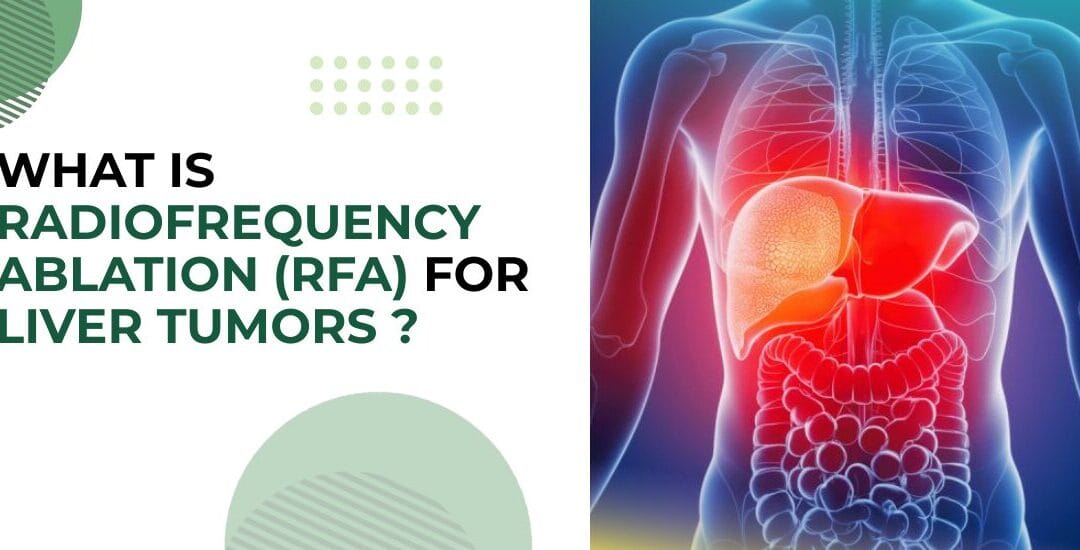
Radiofrequency ablation is a minimally invasive procedure that destroys liver tumors by heating them with electrical energy delivered through a thin needle electrode inserted directly into the tumor, so cancer cells get cooked to death at temperatures around 60 to 100 degrees Celsius while surrounding healthy liver tissue stays protected.
According to Dr. Aniruddha Kulkarni, Interventional Radiologist in Mumbai,
“RFA gives us a way to destroy small liver tumors completely without any cutting at all, we’re using heat to literally burn out cancer cells while patients recover in days instead of weeks from surgery.”
Diagnosed with small liver tumors and exploring treatment options?
How Does RFA Actually Destroy Liver Tumors?
RFA works by inserting a special needle electrode through your skin directly into the tumor using ultrasound or CT guidance for precise placement, then electrical current flows through that electrode creating friction in tissue molecules which generates intense heat that kills cancer cells.
- Image-guided placement uses real-time ultrasound or CT scanning to navigate that ablation needle exactly into the center of the tumor, the interventional radiologist watches on the screen the entire time to make sure positioning is perfect before turning on any heat
- Heat generation happens when radiofrequency energy passes through the electrode tip creating temperatures between 60 and 100 degrees Celsius inside the tumor, this heat denatures proteins and destroys cell membranes so cancer cells die within minutes of exposure
- Ablation zone extends beyond the visible tumor by about 5 to 10 millimeters to create a safety margin that catches any microscopic cancer cells lurking around the edges, the dead tissue eventually gets reabsorbed by your body over several months
- Multiple insertions might be needed for larger tumors where the electrode gets repositioned to overlap ablation zones, this ensures complete tumor destruction even when dealing with masses bigger than what one burn can cover completely
Patients choosing liver cancer management in Chembur through RFA avoid the major surgery and long hospital stays that come with traditional liver resection.
What Results Can You Expect After RFA Treatment?
RFA success depends heavily on tumor size since smaller tumors get destroyed more completely, but the procedure offers excellent local tumor control especially for lesions under 3 centimeters which are ideal candidates for ablation.
Tumor Size | Complete Ablation Rate | Local Recurrence | Best Candidates |
Under 2 cm | 90-95% success | 5-10% recurrence | Primary HCC, Metastases |
2-3 cm | 70-85% success | 15-25% recurrence | Good liver function needed |
3-5 cm | 50-70% success | 30-40% recurrence | May need multiple sessions |
Over 5 cm | 30-50% success | 50%+ recurrence | Consider other treatments |
- Immediate recovery happens surprisingly fast since RFA only involves a needle stick, most people go home the same day or after one overnight stay and return to normal activities within three to five days which beats surgical recovery by miles
- Tumor monitoring with CT or MRI scans done at one month then every three months shows whether the ablation worked completely, successfully treated tumors appear as scar tissue that doesn’t enhance with contrast dye on imaging
- Repeat ablations are totally possible if new tumors pop up later or if initial treatment didn’t quite get everything, some patients end up having RFA done multiple times over months or years to keep controlling their cancer
- Combination approach works really well where RFA treats small tumors while TACE or other methods handle bigger lesions, mixing treatments lets doctors customize your cancer plan based on what each tumor needs specifically
The precision and quick recovery make RFA attractive compared to traditional methods, similar to how angioplasty treatment in Chembur offers minimally invasive vascular care.
Why Choose Dr. Aniruddha Kulkarni for RFA?
Dr. Aniruddha Kulkarni brings over 20 years of interventional radiology experience with specialized training in tumor ablation techniques from his time at Tata Memorial Hospital, having performed numerous RFA procedures at premier institutions like Hinduja and KEM before becoming Director of Vascular and Interventional Radiology at Nanavati Max Superspeciality Hospital.
Patients choose him for his precise needle placement skills, thorough pre-procedure planning using advanced imaging, and realistic communication about what RFA can accomplish for their specific situation.
FAQs
Is RFA as effective as surgery for small liver tumors?
Yes, RFA achieves similar survival rates for tumors under 3 cm with faster recovery.
How long does an RFA procedure take?
Usually 30 to 90 minutes depending on tumor number and location.
Will I need general anesthesia for RFA?
Most procedures use conscious sedation, though general anesthesia is an option.
Can RFA treat multiple liver tumors at once?
Yes, several small tumors can be ablated during the same session.
