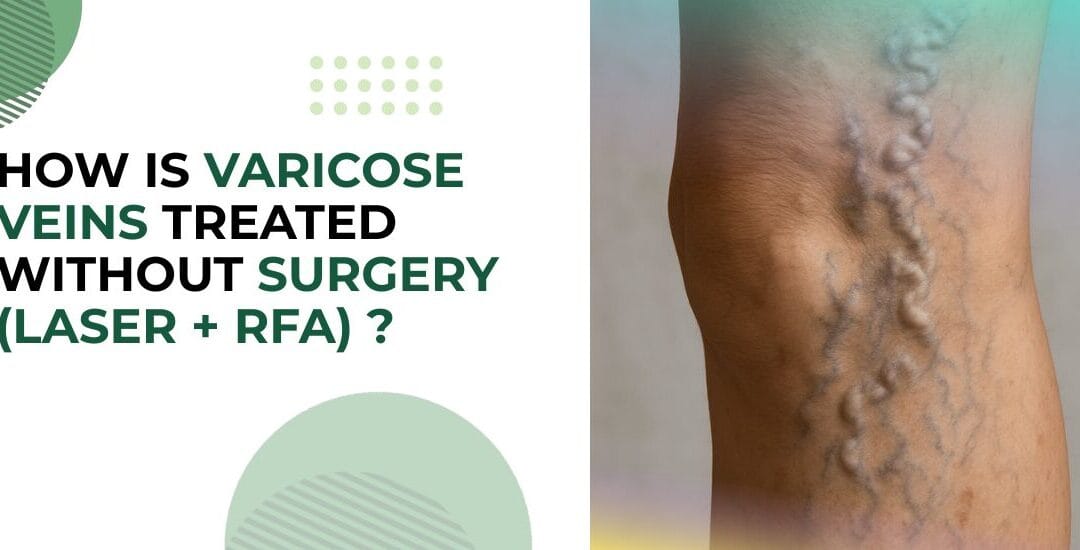
Varicose veins get treated without surgery using laser ablation or radiofrequency ablation that seal off damaged veins from the inside using heat energy delivered through a thin catheter, so blood automatically reroutes to healthy veins while those bulging varicose veins shrink and disappear over time without any cutting or vein stripping involved.
According to Dr. Aniruddha Kulkarni, Interventional Radiologist in Chembur,
“Laser and RFA give us a way to eliminate varicose veins completely without traditional surgery, we’re sealing those faulty veins shut from inside so patients walk out the same day and get back to normal life within days.”
Tired of painful swollen legs and visible varicose veins?
How Do Laser and RFA Actually Work for Varicose Veins?
Both laser and RFA work on the same basic principle where heat energy damages the vein wall from inside causing it to collapse and seal shut permanently, a thin catheter or fiber gets inserted through a tiny needle puncture near your knee or ankle then threaded up through the diseased vein using ultrasound guidance the whole way.
- Ultrasound mapping happens first where the doctor scans your entire leg to map out which veins are damaged and exactly where blood is flowing backward, this shows the complete picture of your venous disease so treatment targets the right veins from the start
- Local anesthesia gets injected around the vein being treated which numbs the area completely and also creates a protective fluid cushion between the vein and surrounding tissue, you’re awake during the procedure but feel basically nothing beyond maybe some pressure sensations
- Heat delivery comes from either laser light or radiofrequency energy that heats the vein wall to around 120 degrees Celsius as the catheter slowly pulls back, this controlled burn shrinks collagen in the vein wall causing immediate collapse and sealing of that vessel
- Instant closure happens right there during the procedure where ultrasound imaging shows the treated vein compressing shut, blood immediately starts using healthy deeper veins instead so circulation actually improves even though you just destroyed a surface vein
Patients choosing varicose veins treatment in Chembur through these methods avoid the painful recovery and scarring that comes with old-school vein stripping surgery.
What's the Difference Between Laser and RFA Treatment?
Both techniques achieve basically the same results but differ slightly in how they generate heat and what energy source they use, most patients qualify for either option so the choice often comes down to doctor preference and your specific vein anatomy.
Treatment Aspect | Laser Ablation (EVLA) | Radiofrequency Ablation (RFA) |
Energy Source | Laser light fiber | Radiofrequency electrode |
Heat Generation | Direct light absorption | Electrical resistance heating |
Pain During | Slightly more sensation | Generally less discomfort |
Bruising After | Moderate bruising possible | Usually minimal bruising |
Success Rate | 95-98% vein closure | 95-98% vein closure |
Recovery Time | 3-5 days normal activity | 2-4 days normal activity |
- Post-procedure care involves wearing compression stockings for about one to two weeks which helps the treated vein stay collapsed while it permanently seals shut, most people can walk immediately after treatment and actually should walk regularly to prevent any clot formation
- Visible improvements start showing within two to four weeks as those bulging veins fade away and any skin discoloration from chronic venous disease begins healing, full cosmetic results take about three to six months as your body reabsorbs the dead vein tissue completely
- Symptom relief happens really fast with leg heaviness and achiness improving within just days after treatment, restless legs and nighttime cramping that many varicose vein patients suffer from often disappear almost immediately once blood flow normalizes
- Long-term success runs around 95 to 98 percent for both laser and RFA with treated veins staying closed permanently in the vast majority of cases, new varicose veins can develop from different vessels over years but those can get treated the same way too
The minimally invasive nature of these treatments shows how far vascular care has advanced, similar to improvements in peripheral angiography treatment in Navi Mumbai for arterial problems.
Why Choose Dr. Aniruddha Kulkarni for Varicose Vein Treatment?
Dr. Aniruddha Kulkarni brings over 20 years of vascular and interventional radiology experience after training at India’s top institutions including Tata Memorial Hospital, Hinduja and KEM hospitals before becoming Director of Vascular and Interventional Radiology at Nanavati Max Superspeciality Hospital where he performs both laser and RFA procedures regularly with excellent outcomes.
Patients choose him for thorough ultrasound evaluation before treatment, precise catheter technique that minimizes discomfort, and honest discussion about which technique suits your specific vein pattern best.
Book your consultation today and experience the compassionate care of Dr. Aniruddha Kulkarni.
FAQs
Is laser or RFA treatment painful?
Minimal discomfort with local anesthesia, most patients describe mild pressure sensations only.
Can I walk immediately after varicose vein treatment?
Yes, walking right after treatment is encouraged to promote healthy circulation.
How long until I see results from treatment?
Visible improvements within 2-4 weeks, full cosmetic results in 3-6 months.
Will my varicose veins come back after treatment?
Treated veins stay closed permanently, though new veins can develop over time.
